
The Body–Mind Connection: Why Therapy Goes Beyond Thoughts
When we talk about mental health, we often imagine something that exists only in the mind—our thoughts, beliefs, or patterns of thinking.
But in reality, mental health is just as much about the body as it is about the mind.
Anxiety is not only a worry—it’s a racing heart, tight chest, restless energy.
Stress is not just pressure—it shows up as fatigue, headaches, irritability.
Emotional pain is often felt physically, even when we can’t fully explain it.
This is what we call the mind-body connection—a continuous, two-way relationship between how you think, how you feel, and how your body responds.
Understanding the Mind–Body Relationship in Psychology
In psychology, the body and mind are seen as deeply interconnected systems.
When you experience stress or anxiety, your nervous system activates automatically—often before you can logically process what’s happening. Your body prepares to react: to fight, avoid, shut down, or cope in ways it has learned over time.
Over time, these responses can become patterns:
- You may feel anxious even in relatively safe situations
- You may struggle with emotional regulation despite understanding your triggers
- You may feel disconnected, numb, or constantly overwhelmed
This is why simply “thinking differently” is often not enough.
Many people come to therapy already aware of their patterns—but still feel stuck when it matters most.
How Therapy Helps Reconnect the Mind and Body
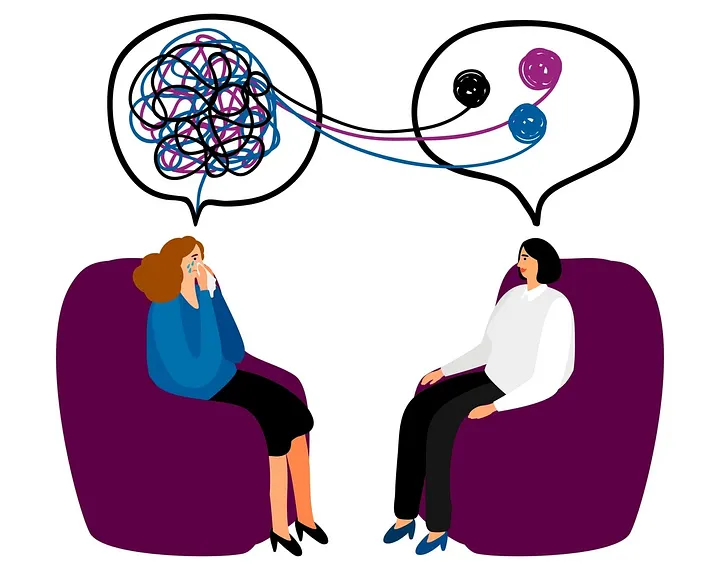
Therapy works by helping you become aware of your internal experience and respond to it differently—not just intellectually, but experientially.
Through therapy, you begin to:
- Notice how stress and emotions show up in your body
- Recognise early signs of anxiety or overwhelm
- Develop emotional regulation skills to manage intense feelings
- Pause before reacting, instead of acting on impulse
- Build a sense of safety and stability within yourself
This is especially important in concerns like:
- Anxiety and panic
- Chronic stress and burnout
- Trauma and emotional overwhelm
- Relationship difficulties
Over time, therapy helps you move from automatic reactions to more intentional, grounded responses.
Our Approach at Prismatic (Bangalore & Online Therapy)
At Prismatic, our approach to therapy is rooted in understanding the whole person—your thoughts, emotions, and bodily experiences.
We offer both online therapy and in-person counselling in Bangalore, and our work focuses on:
- Experiential therapy – helping you feel and notice what is happening within you, not just talk about it
- Evidence-based approaches – including techniques for emotional regulation, distress tolerance, and mindfulness
- Personalised care – therapy tailored to your unique patterns and needs
- A safe, non-judgmental space – where your experiences are understood with empathy
We don’t see therapy as simply “fixing problems.”
We see it as helping you build awareness, resilience, and a healthier relationship with yourself.
Why the Mind–Body Connection Matters in Mental Health
Real change in therapy doesn’t happen only when something makes sense logically.
It happens when:
- Your body begins to feel safer
- Your emotional responses become less overwhelming
- You can stay present, even during difficult moments
This is where the integration of body and mind becomes powerful.
Instead of fighting your thoughts or suppressing emotions, you learn how to work with your internal experience—with more clarity, balance, and control.
In Simple Terms
Therapy helps you:
- Understand your patterns
- Regulate your emotions
- Feel more connected to yourself
And most importantly, it helps you move from:
reacting automatically → to responding with awareness
Looking for Therapy Support?
If you’re experiencing anxiety, stress, emotional overwhelm, or simply want to understand yourself better, therapy can help.
At Prismatic, we offer online therapy across India and counselling in Bangalore, focused on compassionate, evidence-based mental health care.